
When Should You Aerate Your Lawn?
Key Summary
Wondering when you should aerate your lawn? This guide explains the best times of year for lawn aeration, why timing matters, and how to get the most from your soil. Whether you’re considering DIY with a lawn aerator or searching for a trusted lawn aeration service near me, we’ve got you covered.
Why Lawn Aeration Matters
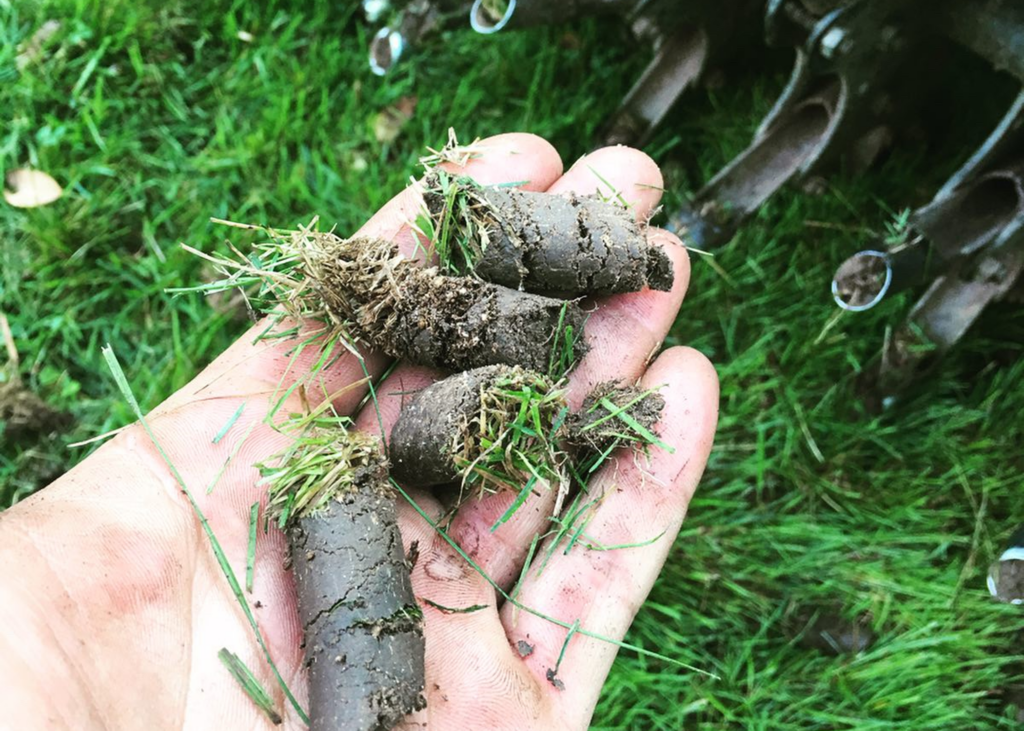
Lawn aeration is one of the most effective ways to improve the health and appearance of your grass—especially here in the North Shore, where soil compaction, heavy rainfall, and seasonal shifts can take a toll. By removing small plugs of soil, aeration allows water, nutrients, and oxygen to reach your lawn’s root system more effectively. The result? A thicker, greener, more resilient lawn that can withstand drought, pests, and foot traffic.
If your yard feels hard underfoot, drains poorly after storms, or has patchy areas despite regular mowing and fertilizing, it’s likely time to aerate. But when, exactly, is the best time to schedule it?
When Should You Aerate Your Lawn in Massachusetts?
In Massachusetts, the ideal time to aerate your lawn is typically during the early fall—between late August and mid-October. This is when the soil is still warm, the air is cooler, and grass is actively growing. These conditions allow your lawn to recover quickly and take full advantage of improved root access to water and nutrients.
Fall aeration is especially beneficial for cool-season grasses like Kentucky bluegrass, fine fescue, and perennial rye—varieties that thrive in our region. Aerating in the fall also helps prepare your lawn for winter by promoting stronger roots and healthier soil structure.
Spring aeration can also be effective—usually in April or early May—as long as the soil is thawed and not overly saturated. However, spring aeration may compete with weed germination and should be followed by proper seeding or fertilizing to support healthy turf growth.
So, to summarize:
— Best time: Late August through October
— Alternate option: Early spring (April–May)
— Avoid: Summer heat and frozen winter soil
How to Know if Your Lawn Needs Aeration
Aeration isn’t necessary for every lawn every year. But if your property shows any of the following signs, it’s a strong candidate:
— Spongy or compacted soil
— Water pooling or slow drainage
— Thin, patchy grass
— Heavy foot traffic or vehicle use
— Newly built homes (often have compacted subsoil)
— Thatch layer over ½ inch thick
To test for compaction, try pushing a screwdriver or soil probe into your lawn. If it’s difficult to penetrate more than a few inches, your lawn will benefit from aeration.
DIY vs. Professional Lawn Aeration Service
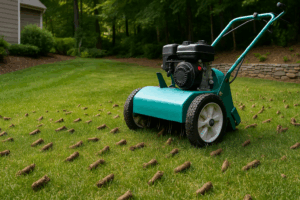
If you’re considering tackling aeration yourself, you’ll need to rent or purchase a lawn aerator. These machines come in two main styles: spike aerators, which punch holes into the ground, and core aerators, which remove soil plugs. Core aerators are more effective and recommended for long-term results—but they’re heavy and require some experience to operate properly.
That’s why many homeowners search for a lawn aeration service near me to save time, prevent damage, and ensure better results. At Marotta Landscaping, we use commercial-grade aerators that penetrate to the ideal depth and spacing. Our trained crew handles everything—timing, technique, and cleanup—so you can sit back while your lawn gets stronger from the roots up.
We also pair aeration with Irrigation services and overseeding when appropriate. Aerating before overseeding ensures new seed has direct soil contact for better germination and thicker turf.
How Marotta Landscaping Handles Aeration
Our aeration process starts with a free consultation where we evaluate your soil condition, grass type, and lawn usage. From there, we schedule the aeration based on ideal weather conditions and grass health. We always:
— Use core aeration equipment
— Time the service during peak growth seasons
— Remove and distribute plugs evenly
— Offer optional overseeding or fertilization packages
— Follow up with guidance on watering and mowing after treatment
We’re based in Peabody and serve the entire North Shore, including Danvers, Middleton, Swampscott, Marblehead, and surrounding towns. Our local knowledge means we understand the exact conditions your lawn faces throughout the year.
Explore our full Aeration Service page for more details on how it works and what to expect during your appointment. Whether it be aeration, holiday lighting, or outdoor lighting, we would love the chance to work with you!
Want to get started? Contact us for a free estimate and we’ll handle the rest.
Frequently Asked Questions
Can I aerate my lawn in the summer?
We don’t recommend summer aeration. Hot temperatures and dry soil make it difficult for grass to recover. Fall or spring is a much better time to schedule service.
How often should I aerate my lawn?
Most lawns benefit from aeration once a year. Heavily compacted or high-traffic areas may need it twice annually—in spring and fall.
What should I do after lawn aeration?
Water your lawn thoroughly, avoid mowing for a few days, and consider overseeding or fertilizing within a week to maximize results.
Do the soil plugs need to be removed?
No. The plugs left behind by the aerator will naturally break down over time, returning nutrients to the soil and improving its structure.
What’s the best time of day to aerate?
We recommend aerating in the morning when the soil is moist from dew or light watering, but not soggy. Avoid aerating during or after heavy rain.